
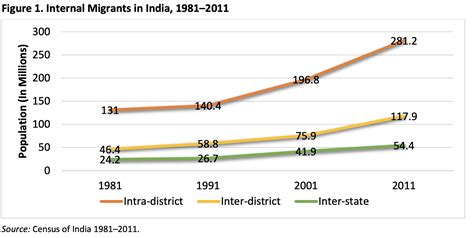
Migration Information Graph Of India is a data visualization that maps how people move between states and regions, showing origin-destination links and regional patterns. This article busts myths about Migration Information Graph Of India, offering guidance on interpretation, data sources, and limitations to help readers read visuals with clarity.
Bust The Myth About Migration Information Graph Of India
Key Points
- The Migration Information Graph Of India highlights directional flows between states, not just aggregate migrant counts.
- Data fueling the graph typically come from multiple official sources and timeframes, requiring attention to year and methodology.
- It may underrepresent circular or short-term migration, so readers should consider the graph a partial view of mobility.
- Visual emphasis can mislead if causation is inferred without context such as economic conditions or policy changes.
- Reading the graph effectively means checking scale, units, and the population base to avoid overinterpretation.
What the graph can reveal
The Migration Information Graph Of India can illuminate which states are net sources of migrants and which are receiving more people. It also reveals major migration corridors, such as flows toward urban centers or economically vibrant regions, helping to visualize regional dynamics and growth patterns over a specified period.
What the graph cannot show
It does not establish cause-and-effect relationships or capture every nuance of mobility, such as temporary labor migration, circular journeys, or undocumented movements. Gaps can arise from data collection cycles, sampling limitations, or differences in how migration is defined across surveys.
How to read it responsibly
To interpret the graph accurately, check the data year, the unit of analysis (state-to-state vs district-level), and the data source. Look for legends that explain flow direction and magnitude, and compare the graph against population size and economic indicators to avoid drawing misleading conclusions.
Practical implications for policy and research
Policymakers can use insights from the graph to plan for housing, infrastructure, healthcare, and job creation in regions that experience high inflows or outflows. Researchers should triangulate the visualization with qualitative studies and other data sources to build a fuller picture of migration drivers and outcomes.
What exactly does the Migration Information Graph Of India illustrate?
+It presents directional migration flows between states or regions over a defined period, highlighting where migrants originate and where they settle, rather than giving a complete census of all movements or explaining why people move.
Can I interpret a large flow as a sign of good or bad economic conditions?
+No. A large flow may reflect many factors, including economic opportunities, housing availability, or demographic shifts. Context from other indicators is essential to avoid misreading.
Why might the graph underrepresent certain types of migration?
+Short-term, circular, or undocumented movements and some temporary work migrations may not be fully captured due to data collection limits, definitions, and reporting lags in official sources.
How should researchers use this graph alongside other data?
+Researchers should triangulate the graph with qualitative studies, labor market data, education and health indicators, and time-series analyses to build a more comprehensive view of migration dynamics.