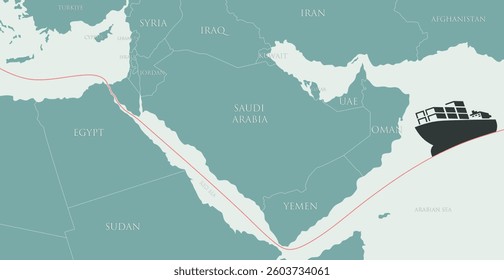
The Iran To Israel Distance is often introduced as a simple measurement, but it represents much more than miles on a map. It frames how policymakers think about geography, transit routes, and risk in a region where borders and alliances shift quickly. Understanding this distance helps explain why some corridors are viable in theory but impractical in practice.
In this article we unpack the concept of the Iran To Israel Distance, explore the main routes that are discussed in strategic circles, and examine the geopolitical context that shapes what is possible today and what could change in the near future.
Key Points
- The great-circle "as-the-crow-flies" distance between Tehran and Tel Aviv is roughly 1,000–1,300 miles (1,600–2,100 kilometers), but practical routing often adds hours of travel time.
- Geopolitical constraints, including sanctions and diplomatic ties, are often as important as geography in determining feasible routes.
- Transit corridors depend on third-country hubs (for air travel) or land routes through neighboring states, each with its own set of permissions and risks.
- Direct commercial links are limited or non-existent, so the Iran To Israel Distance is frequently bridged by indirect routes via other states and institutions.
- Technological and strategic developments, from aviation routing to contingency planning, influence how this distance translates into security postures and logistics.
Overview of the Iran To Israel Distance
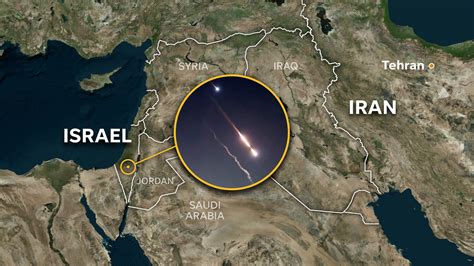
Geography sets the stage for how far apart Iran and Israel are in physical terms, but the practical implications extend to logistics, security policy, and regional diplomacy. In the context of the Iran To Israel Distance, decision-makers weigh not just miles but the availability of routes, the reliability of transit partners, and the likelihood that corridors stay open under shifting sanctions and alliances.
Routes, Hubs, and Practical Realities of the Iran To Israel Distance
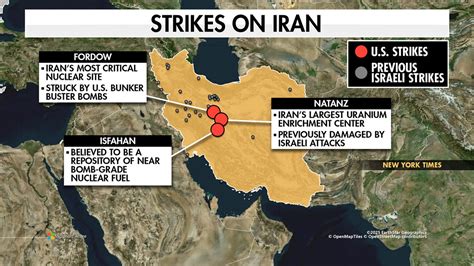
The distance between Iran and Israel invites consideration of several route types, each with distinct advantages and constraints. In the context of the Iran To Israel Distance, analysts examine air corridors, overland possibilities, and the role of regional hubs in enabling movement despite political frictions.
Direct travel distance and how it’s measured
Geographers typically describe distance with great-circle measurements. Between Tehran and Tel Aviv, the “Iran To Israel Distance” in great-circle terms sits around 1,000–1,300 miles (1,600–2,100 kilometers). However, actual travel distance for routes that are used in policy analysis often exceeds this due to the need to navigate safe airspace, sanctions-related restrictions, and visa or entry controls.
Air travel routes and practical constraints
There are no direct commercial flights that connect Iran and Israel in the usual sense, so any movement between the two must pass through third-country hubs. Commonly discussed air routes route passengers through gateways like Istanbul, Doha, or Dubai, subject to regulatory approvals and airline policies. For goods, air freight typically relies on indirect leg networks rather than a direct Iran To Israel Distance.
Overland, maritime, and multi-modal considerations
Overland travel from Iran to Israel is limited by borders and diplomacy, with potential corridors opening or closing depending on regional alignments. Maritime options for goods often involve routing shipments through the wider Mediterranean and Gulf hubs, using third parties to bridge the Iran To Israel Distance in practice. Each route requires careful risk assessment of political, security, and logistical factors.
Role of mediation, sanctions, and regional hubs
Third-country hubs in Turkey, the UAE, Jordan, or Cyprus can act as relay points in bridging the Iran To Israel Distance. The viability of these routes hinges on diplomatic status, transit permissions, and the evolving sanctions landscape, which can rapidly reshape what’s possible.
Geopolitical Context of the Iran To Israel Distance
The Iran To Israel Distance cannot be understood in isolation from the broader geopolitical map. Security calculations, energy considerations, and the influence of external powers shape how policymakers frame risk, deterrence, and potential cooperation. Even when the physical distance is clear, the political distance—how actors perceive risk and legitimate routes—often exceeds the literal miles on the globe.
In recent years, shifts in regional alignments, sanctions regimes, and international diplomacy have altered the practicality of various corridors. Analysts track these dynamics to assess whether new routes could emerge, whether existing ones could expand, or whether novel forms of transit—such as aerial corridors shaped by multilateral agreements—might alter the Iran To Israel Distance in a functional sense.
What is the approximate Iran To Israel Distance in miles and kilometers?
+The great-circle distance between Tehran and Tel Aviv is roughly 1,000–1,300 miles (1,600–2,100 kilometers). Actual practical routes can be longer due to airspace restrictions and routing via third-country hubs.
<div class="faq-item">
  <div class="faq-question">
    <h3>Why are there no direct routes between Iran and Israel?</h3>
    <span class="faq-toggle">+</span>
  </div>
  <div class="faq-answer">
    <p>Diplomatic non-recognition, sanctions, and security concerns limit direct travel and transport. Most movement relies on indirect routes through third countries and international hubs.</p>
  </div>
</div>

<div class="faq-item">
  <div class="faq-question">
    <h3>How can geopolitical events affect the distance in practice?</h3>
    <span class="faq-toggle">+</span>
  </div>
  <div class="faq-answer">
    <p>Shifts in alliances, sanctions adjustments, or peace negotiations can open or close corridors, effectively changing the practical distance by making routes longer, shorter, or unavailable.</p>
  </div>
</div>

<div class="faq-item">
  <div class="faq-question">
    <h3>What role do regional hubs play in bridging the distance?</h3>
    <span class="faq-toggle">+</span>
  </div>
  <div class="faq-answer">
    <p>Hubs in Turkey, the UAE, Jordan, and Cyprus can act as relay points, enabling movement between Iran and Israel where direct connections are blocked by policy. Their viability depends on permissions and the sanctions regime.</p>
  </div>
</div>

<div class="faq-item">
  <div class="faq-question">
    <h3>What might change the future of the Iran To Israel Distance?</h3>
    <span class="faq-toggle">+</span>
  </div>
  <div class="faq-answer">
    <p>New diplomatic breakthroughs, changes in international sanctions, or regional security arrangements could create new routes or normalise certain corridors, altering how the distance is navigated in practice.</p>
  </div>
</div>